How Peyronie's Injections Work
Peyronie’s disease is a condition in which firm scar tissue, known as a plaque, develops within the penis. It can cause curvature, a change in shape, and in some men pain during erections.
At Newcastle Men’s Health, we offer a non-surgical treatment option for selected patients: a course of intralesional hyaluronic acid injections placed directly into the affected tissue. This is an emerging treatment, increasingly used by andrologists and supported by early published research, though it is not yet included as a standard option in major clinical guidelines.
Treatment is led by Miss Judith Dockray, Consultant Urological Surgeon and Andrologist, following an individual assessment to confirm whether it is appropriate for you.
When This Treatment May Be Appropriate
Intralesional injection therapy may be considered for selected men with Peyronie’s disease following clinical assessment. Situations where it may be appropriate include:
- Penile Curvature
A bend or change in shape caused by plaque within the penis. - Pain During Erections
Discomfort associated with the active phase of the condition. - Active (Early) Phase Disease
Where changes are still developing — the phase in which this treatment is most studied. - Preference for a Non-surgical Option
For men who wish to explore alternatives to surgery, where clinically suitable.
A clinical assessment is important to determine the most appropriate treatment option.
Evidence-Based Clinical Approach
The injections use hyaluronic acid, a naturally occurring substance, delivered directly into the plaque with the aim of reducing inflammation and influencing the scar tissue associated with curvature. In the UK, a licensed hyaluronic acid product (Perovial) is available specifically for use in Peyronie’s disease.
Published studies suggest that intralesional hyaluronic acid may help reduce penile curvature and improve pain in some men, particularly in the earlier, active phase, with a favourable safety profile in the studies reported to date. The size of the benefit reported has generally been modest, and the evidence base remains limited by small studies and short follow-up. We discuss the realistic aims and limitations of treatment with every patient before starting.
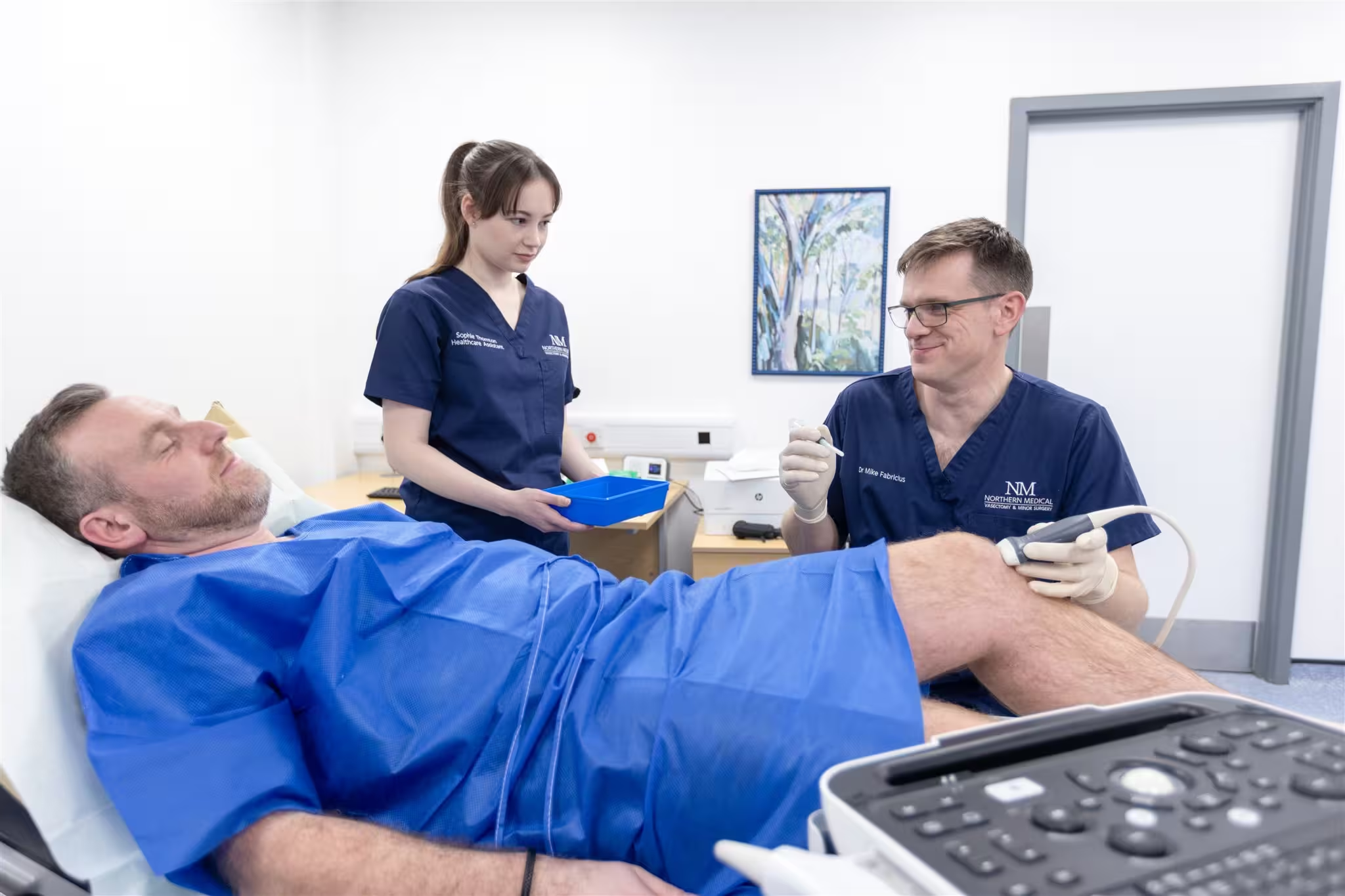
Before any treatment, every patient has an outpatient assessment with Miss Dockray to confirm the diagnosis and assess the degree of curvature. This may involve assessment of clinical photographs, or an intracavernosal test injection in clinic where a more precise measurement is needed. Where treatment is suitable, it is given as a course of 10 injections delivered as outpatient appointments in clinic.

Who We Help
We support men from across Newcastle and the wider North East affected by Peyronie’s disease, including:
Men With Penile Curvature
Who would like to explore a non-surgical treatment option.
Men Experiencing Pain
Associated with the active phase of the condition.
Men Seeking a Clear Diagnosis
Who want assessment and an explanation of the options available.
Men Considering Their Options Before Surgery
Who wish to understand non-surgical approaches first.
Our Specialist
Intralesional injection therapy at Newcastle Men’s Health is led by Miss Judith Dockray (Consultant Urological Surgeon and Andrologist). Miss Dockray studied Medicine at the University of Cambridge, graduating with distinction, and completed a master’s in Urology with commendation. She undertook the Men’s Health fellowship at Mount Sinai Hospital, University of Toronto, and holds an elected position on the Andrology Committee of the British Association of Urological Surgeons. She has particular expertise in andrology and men’s health conditions, including Peyronie’s disease.
Individual injections within a course may also be carried out by Dr Mike Fabricius, Clinical Director at Newcastle Men’s Health.
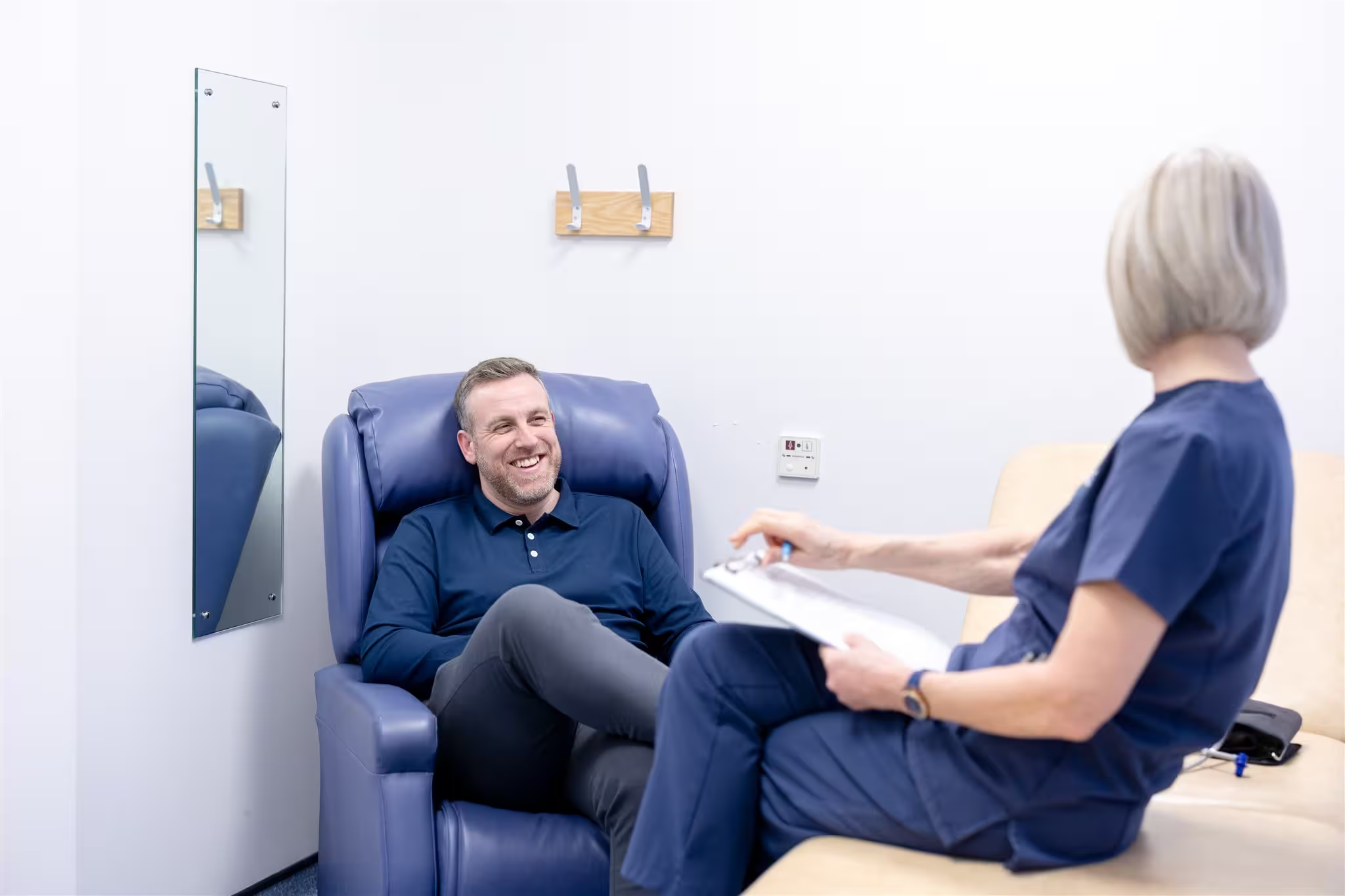
Prior to treatment, patients undergo a clinical assessment to confirm that the treatment is appropriate and to discuss the procedure, expected aims, and potential risks. Follow-up care is provided as part of the clinic’s men’s health service.

Getting to Our Newcastle Clinic
Newcastle Men’s Health is located within Blaydon Primary Care Centre, Shibdon Road, Blaydon-on-Tyne (NE21 5NW), just minutes from the A1 and the Metrocentre.
Our clinic is easily accessible for patients travelling from Newcastle, Gateshead, Sunderland, Durham, and across the wider North East. Free on-site parking is available at the centre.
Pricing and Insurance
We provide clear pricing for our specialised services to ensure clarity for our patients.
-
Outpatient assessment (with Miss Dockray) £240
-
Intralesional injection (per injection) £600
This is a private surgical service on a self-pay basis. We can provide the necessary clinical letters for your insurance provider should you wish to seek reimbursement for a medically indicated treatment.

Treatment Options Compared
Feature
Conservative Treatment
Intralesional Injection Therapy
Treatment approach
Oral medication, observation, or physical therapy
A course of injections placed directly into the affected tissue
Typical use
Mild symptoms, or while the condition is monitored
Selected patients seeking a non-surgical option after assessment
Goal of treatment
Manage symptoms and monitor progression
Aims to reduce curvature and improve pain in suitable patients
Setting
At home or in clinic
Minor outpatient procedure performed in clinic
Frequently Asked Questions
What is Peyronie’s disease?
Peyronie’s disease is a condition in which firm scar tissue, called a plaque, forms within the penis. This can cause the penis to curve or change shape, and some men experience pain during erections.
How do the injections work?
The treatment involves injecting hyaluronic acid, a naturally occurring substance, directly into the affected scar tissue, with the aim of reducing inflammation and influencing the plaque associated with curvature. It is a non-surgical, minimally invasive approach.
Is this treatment guaranteed to straighten the curvature?
No. No treatment for Peyronie’s disease can guarantee a particular result. Published studies suggest intralesional hyaluronic acid may help reduce curvature and improve pain in some men, but the degree of benefit varies between individuals and is often modest. Your clinician will discuss realistic aims with you before treatment.
Is this an established, guideline-recommended treatment?
Intralesional hyaluronic acid is an emerging treatment. It is increasingly used by andrologists and is supported by early published research, and a licensed product is available in the UK, but it is not yet included as a standard option in major clinical guidelines. We explain the current evidence and its limitations during your assessment.
Do I need an assessment first?
Yes. Every patient has an outpatient assessment with Miss Dockray before any treatment is offered. This may involve assessment of clinical photographs, or an intracavernosal test injection in clinic if a more precise measurement of curvature is needed.
How many injections will I need?
Treatment is typically provided as a course of 10 injections, delivered as outpatient appointments. Your clinician will explain the schedule and review your progress during the course.
What are the potential side effects?
In the studies reported to date, side effects have generally been local and mild, such as bruising, swelling, or discomfort at the injection site. As with any injection there are some risks, and your clinician will discuss these with you fully before you decide whether to proceed.
Is the treatment painful?
Most men tolerate the injections well, and any discomfort is usually short-lived. Your clinician will explain what to expect before you begin.
Glossary of Terms
- Peyronie’s Disease: A condition where scar tissue (plaque) forms in the penis, causing curvature, change in shape, or pain.
- Plaque: An area of firm scar tissue within the penis associated with peyronie’s disease.
- Intralesional Injection: An injection placed directly into the affected tissue or plaque.
Hyaluronic ACID — a naturally occurring substance used in this treatment, delivered by injection into the plaque. - Intracavernosal Test Injectio: An injection used in clinic to produce an erection so that curvature can be accurately assessed.
- Active (Acute) Phase: The earlier phase of peyronie’s disease when changes are still developing; the phase in which this treatment is most studied.